Eyal Weiss

Eyal Weiss

Postdoctoral researcher | AI & Robotics | Planning, Search & Optimization
Robotics Institute, Carnegie Mellon University

What I’m passionate about: AI and robotics, particularly through the lens of planning, search and control.


I am a postdoc at the Robotics Institute at Carnegie Mellon University, affiliated with the Search-based Planning Laboratory (SBPL) led by Prof. Maxim Likhachev and the ARCS Lab led by Prof. Jiaoyang Li. My current research spans Search, AI Planning, Motion Planning for robotics, and Combinatorial Optimization. I am particularly interested in planning with learned skills and models: learned robot skills offer a scalable and general path toward ever more capable robots, and planning is what composes them into reliable, long-horizon behavior.


Prior to joining CMU I was a postdoc at the Computational Robotics Lab (CRL) led by Prof. Oren Salzman, in the CS Faculty at the Technion.


I had the privilege to conduct my PhD under the supervision of Prof. Gal A. Kaminka, affiliated with the MAVERICK research group, in the CS department at BIU. My research was, and partially still is, devoted to generalizing automated planning with dynamically estimated action models, where we combined tools from AI planning, graph theory and combinatorial optimization, to endow agents with enhanced planning capabilities in challenging (non-classical) setups.


Previously, I earned my BSc and MSc in Electrical Engineering at Tel Aviv University, where I was fortunate to work with Prof. Michael Margaliot, in the EE school at TAU, on problems in the fields of control theory and dynamical systems.
📄 My complete CV

When AI agents program robots, they tailor rather than invent

Coding agents given a simulator and $20 now write robot programs that beat planners built by experts. I looked inside 112 of those programs: no new algorithms, just known methods tuned to the scene, the robot, and the agent’s own habits.

October 8, 2026 · Eyal Weiss

Nobody is in charge of the flock

A flock with no leader, three local rules, and one knob that flips a crowd from chaos to a single moving body — and what that says about planning for teams of robots.

September 30, 2026 · Eyal Weiss

When Your Neighbors Are Wrong, Listening to Them Makes You Worse

A cost-sensitive neighborhood aggregation method for GNNs that routes neighbors by similarity — and what its failures reveal about two fundamentally different kinds of heterophily.

March 31, 2026 · Eyal Weiss

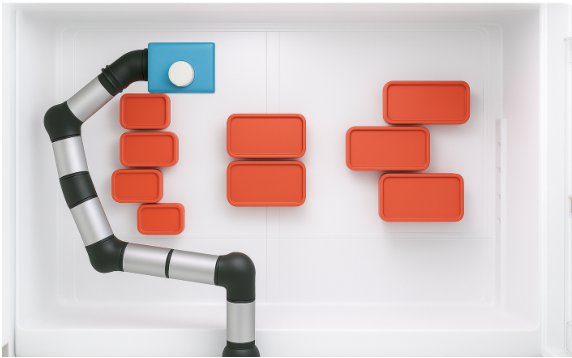
What if warehouse robots planned around the packages, not themselves?

A simple change in perspective — planning paths for items instead of robots — leads to provably optimal warehouse rearrangement and up to 2x faster completion times.

March 23, 2026 · Eyal Weiss

Motion planning time for robots is almost immediate

A plain-language look at “Motions in Microseconds” (Thomason, Kingston and Kavraki, ICRA 2024), which cuts robot motion planning from milliseconds to microseconds with vectorized sampling-based planning.

December 31, 2025 · Eyal Weiss